
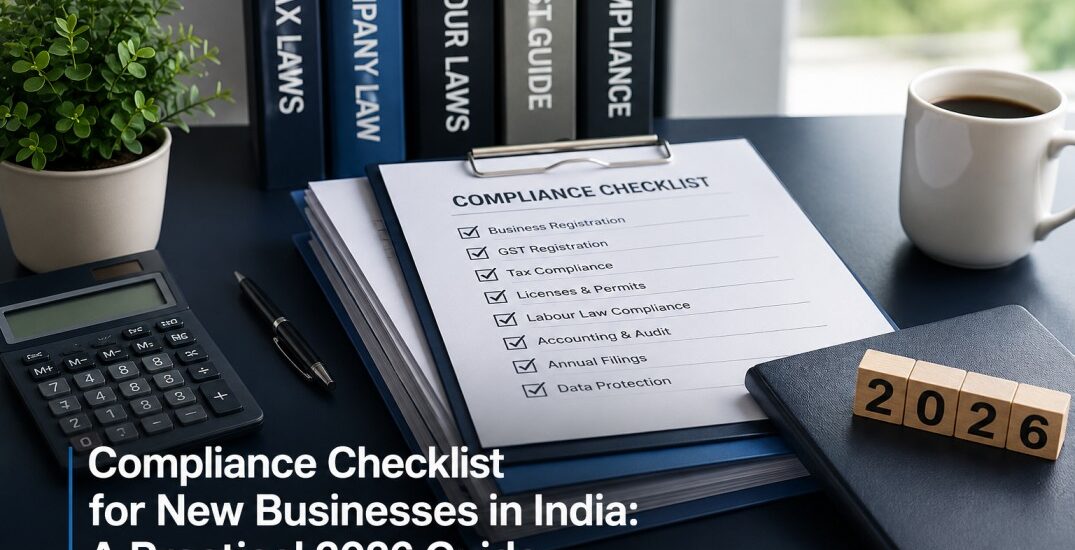
For a new business, compliance is not just about filing forms or paying taxes. It is about creating the right structure, maintaining proper records, protecting employees, meeting tax obligations and avoiding problems that could become expensive later.
This compliance checklist for new businesses in India is designed to give entrepreneurs a practical overview of the important areas they should consider when setting up and running a business.
Why Business Compliance Matters
Many entrepreneurs focus heavily on sales and marketing during the early stages. Compliance often gets pushed to the background because it does not seem urgent.
That can be a costly mistake.
Missing a required filing, failing to maintain statutory records or operating without a necessary registration can result in penalties, notices, interest or other legal complications. Good compliance also makes the business more credible when dealing with customers, investors, banks and potential partners.
A strong compliance system from the beginning is much easier than trying to correct years of mistakes later.
Compliance Checklist for New Businesses in India
1. Choose the Right Business Structure
The first step is deciding how the business should be legally structured.
Depending on your goals, you may consider:
- Sole proprietorship
- Partnership firm
- Limited Liability Partnership (LLP)
- Private limited company
- One Person Company (OPC)
The choice can affect taxation, liability, ownership, funding and ongoing compliance requirements.
For companies incorporated through the MCA’s SPICe+ process, several registrations and services can be integrated into the incorporation process.
2. Complete Business Registration
Once the structure is decided, complete the applicable registration process.
For a company, this generally involves incorporation with the Ministry of Corporate Affairs (MCA), including documents such as the Memorandum of Association and Articles of Association.
Make sure important documents such as the Certificate of Incorporation, PAN, TAN, constitutional documents and registered-office records are properly stored.
A well-organised document system will save considerable time when the business later applies for loans, opens additional accounts, raises investment or responds to regulatory requirements.
3. Check GST Registration Requirements
GST is an important part of the compliance checklist for new businesses in India.
Whether GST registration is required depends on factors such as turnover, the nature of supplies and specific provisions applicable to the business.
Businesses that are liable to register need to complete the registration process and then follow applicable GST return, invoicing and record-keeping requirements. The GST portal requires details including PAN, business information, authorised signatory details and principal place of business.
Do not assume that every business has the same GST obligations. The applicable requirements should be checked based on the business model.
4. Open a Business Bank Account
Keeping business and personal finances separate is a simple but important practice.
A dedicated business bank account helps with:
- Tracking business income and expenses
- Maintaining cleaner accounting records
- Preparing financial statements
- Supporting tax filings
- Demonstrating financial transparency
For companies incorporated through SPICe+, MCA’s AGILE-PRO-S process also facilitates application for opening a company bank account.
5. Set Up Proper Accounting and Bookkeeping
Good bookkeeping should start from the first transaction, not when the first tax notice arrives.
Maintain records of:
- Sales invoices
- Purchase invoices
- Expenses
- Bank transactions
- Employee payments
- Tax payments
- Loans and investments
- Fixed assets
Use accounting software or professional bookkeeping support where appropriate. Accurate records make tax filing easier and help business owners understand whether the business is actually making money.
6. Check State-Specific Registrations
Not every compliance requirement is central-government based.
Depending on where your business operates, you may need registrations or licences under state-specific laws, including Shops and Establishments requirements, professional tax and local authority licences.
These requirements can differ from one state to another, so entrepreneurs should check the rules applicable to their location and business activity.
7. Understand Employee-Related Compliance
Hiring employees brings another layer of responsibility.
Depending on the business and employee strength, employers may need to consider requirements relating to:
- Employment contracts
- Minimum wages
- Working hours
- Leave and holidays
- Payroll records
- Provident Fund
- Employee State Insurance
- Professional tax
- Workplace policies
For new companies incorporated through SPICe+, EPFO and ESIC registrations are incorporated into the process where applicable, although the actual compliance obligations depend on the relevant statutory thresholds and provisions.
8. Protect Intellectual Property
Your business name, logo, product design, software, content or invention may represent significant value.
Consider whether you need:
- Trademark registration
- Copyright protection
- Patent protection
- Design registration
- Confidentiality agreements
Protecting intellectual property early can reduce the risk of disputes and prevent another party from building a competing identity around your brand.
9. Prepare Business Contracts
A handshake may feel simple, but written agreements provide clarity.
New businesses should consider appropriate agreements for:
- Customers
- Vendors
- Employees
- Freelancers
- Business partners
- Investors
- Consultants
Contracts should clearly explain responsibilities, payment terms, confidentiality, intellectual property ownership, termination conditions and dispute resolution.
Getting these terms right at the beginning can prevent misunderstandings later.
10. Maintain Ongoing MCA and Statutory Compliance
Incorporation is only the beginning.
Companies and LLPs have continuing filing and record-keeping responsibilities. Depending on the entity, this may include annual filings, financial statements, board-related records, statutory registers and other prescribed forms.
A business should maintain a compliance calendar showing what needs to be filed, when it is due and who is responsible for it.
This is one of the easiest ways to prevent missed deadlines.
11. Review Industry-Specific Licences
Some businesses need additional licences because of the industry they operate in.
For example, businesses dealing with food, manufacturing, imports and exports, financial services, healthcare, education or regulated products may have additional requirements.
Before launching operations, identify whether your specific business activity requires any licence, approval or registration.
12. Follow Data Protection and Privacy Practices
Modern businesses collect customer names, phone numbers, email addresses, payment information and other personal data.
Businesses should therefore take privacy and data security seriously.
Create appropriate privacy notices, control access to customer information and use reasonable security practices. Businesses should also understand the legal requirements applicable to their collection and processing of personal data.
Common Compliance Mistakes New Businesses Make
The biggest compliance mistakes are often surprisingly simple.
Some businesses:
- Choose a structure without considering long-term needs
- Mix personal and business finances
- Delay bookkeeping
- Miss filing deadlines
- Ignore state-specific registrations
- Use contracts copied from the internet without reviewing them
- Forget employee-related obligations
- Fail to protect their brand
- Assume registration automatically means all compliance is complete
The better approach is to treat compliance as an ongoing business function rather than a one-time registration task.
How a Corporate Law Firm Can Help
For founders, understanding every applicable law while simultaneously managing sales, operations and employees can be overwhelming.
A professional legal team can help identify applicable registrations, review contracts, structure the business appropriately and create a compliance calendar.
Businesses looking for the best corporate law firm in Kochi can consider professional legal support for incorporation, contracts, corporate advisory and ongoing compliance.
For companies operating across the state, choosing the best corporate law firm in Kerala can also provide access to broader corporate legal assistance and state-specific guidance.
If your business has international operations, expansion or UAE-related requirements, working with a team that understands both Indian and international corporate matters can also be valuable. Businesses seeking the best corporate law firm in UAE should evaluate experience, service scope and understanding of the applicable jurisdiction.
Final Thoughts
Starting a business is about more than getting your first customer. It is about building an organisation that can grow without being held back by avoidable legal and regulatory problems.
This compliance checklist for new businesses in India can serve as a starting point for entrepreneurs who want to build their businesses on a stronger foundation.
The exact requirements will depend on your business structure, location, industry, turnover and employees. Therefore, it is always sensible to review your compliance requirements with qualified professionals before making important legal or tax decisions.
When compliance becomes part of your business routine from day one, you can spend more time focusing on what really matters: growing your business.